
 Upgrade plan
 Cancel plan
 Settings
 Change Password
 Contact Us
[CA] What documents do you need for a simple estate plan that leaves everything to one person?
 18
 6



Full conversation
I need to set up a will and POA.


I understand that setting up a will and power of attorney can feel overwhelming. Have you already decided on the specific assets or beneficiaries you want to include in your will?
Yes.
Do you have someone in mind who you would like to appoint as your power of attorney?
Yes.
Is there anything else the Estate Lawyer should know before I connect you? Rest assured they’ll be able to help with your will and POA.
No.

Hey there! Welcome to our service. I’m Andres Sanchez, an attorney with many years of experience. I understand you’re looking to set up a will and power of attorney. Let’s work through this together.
Sounds great.
Let’s start by making sure you have all the necessary information and documents ready. Do you have a list of your assets and the beneficiaries you want to include in your will?
I don’t have an explicit list. I just want a blanket will that will give all my assets to one person.
Okay, what state are you in?
California.
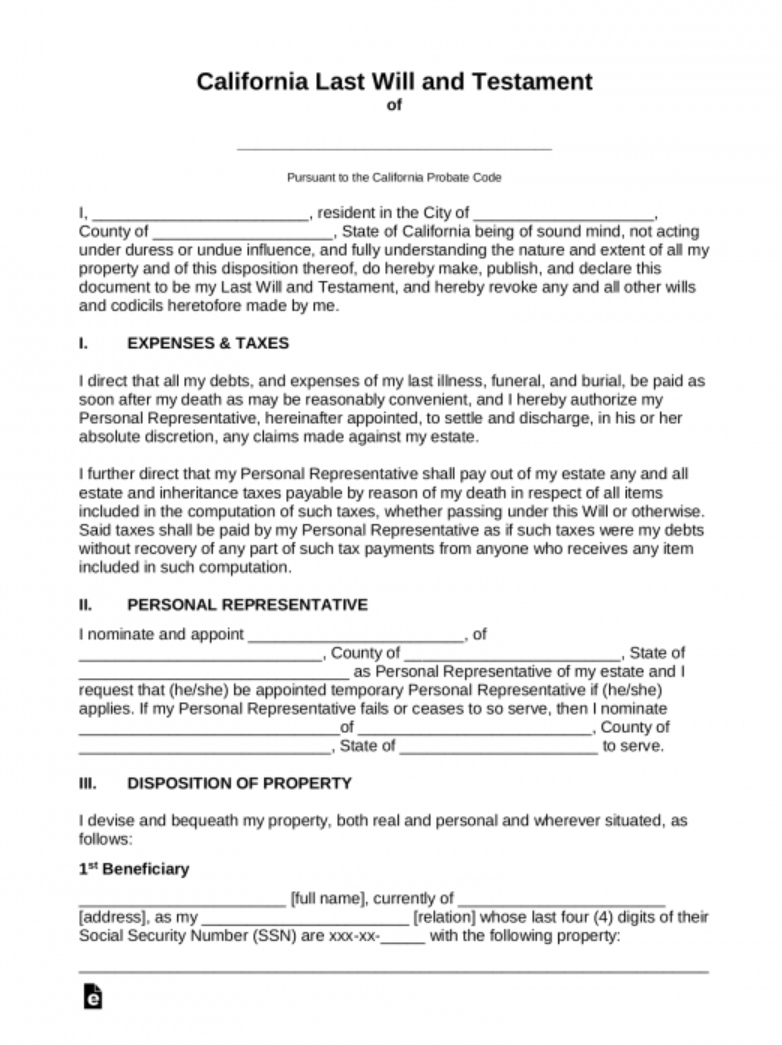
If your goal is simply, “When I die, everything I own goes to one person,” and you are in California, you can usually accomplish that with a straightforward will plus two powers of attorney:
Simple Will: leaves all of your assets to one beneficiary and names an executor. California also offers a fill-in-the-blank statutory will form (Cal. Prob. Code § 6240).
Durable Financial Power of Attorney: allows someone to handle your finances if you become incapacitated. A power of attorney remains effective during incapacity when it is written as durable (Cal. Prob. Code § 4124), and California provides a uniform statutory form (Cal. Prob. Code § 4401).
Advance Health Care Directive: allows someone to make medical decisions for you and includes your end-of-life wishes. In California, the Advance Health Care Directive serves as the medical POA. The statutory form is set out in Cal. Prob. Code § 4701.
For a very basic estate plan, you would typically decide:
- Who receives everything (your beneficiary).
- Who serves as executor of your will.
- Who serves as your financial agent under the POA.
- Who serves as your health care agent.
Often people choose the same trusted person for all three roles.
A simple California will might state:
“I give all of my property, real and personal, to [Name]. If [Name] does not survive me, then to [Alternate Name].”
The documents must be properly signed and witnessed (or notarized, depending on the document) to be valid. A will generally must be signed and witnessed by two people (Cal. Prob. Code § 6110), and a financial power of attorney must be notarized or signed by two witnesses (Cal. Prob. Code § 4121). California’s Advance Health Care Directive generally requires either two qualified witnesses or notarization (Cal. Prob. Code § 4673), and the witness qualification rules are in § 4674.
One thing to consider: if you own a home, significant investments, or assets that would otherwise require probate, many California residents use a revocable living trust instead of relying solely on a will because it can help avoid probate. A will alone does not avoid probate. Smaller estates may qualify for a simplified transfer process without full probate under Cal. Prob. Code § 13100.
I don’t own a home and only have modest investments. Where would I start the process of drafting said will and both POAs?
You have a couple of options to get started with drafting your will and POAs:
- Consult with an Estate Attorney: This is often the best route if you want personalized advice and assurance that everything is done correctly. An attorney can draft the documents for you and ensure they meet all legal requirements.
- Online Legal Services: There are reputable online platforms where you can create legal documents like wills and POAs. These services guide you through the process and can be a cost-effective option.
- DIY Kits: You can find do-it-yourself kits for wills and POAs at bookstores or online. These are generally more affordable but require you to ensure everything is filled out correctly.
If you choose to go with an attorney, you can search for estate planning attorneys in your area or ask for recommendations from friends or family. If you prefer online services, make sure to choose a reputable one with good reviews.
Let me know if you have any more questions or need further assistance!
Thank you!
You’re welcome! If you have any more questions or need help in the future, feel free to reach out. Have a great day!
Disclaimer
By messaging FreeLegalAdvice.com, you agree to our Terms and have read our Privacy Policy.
The information provided on AskaLawyer.com is for general informational purposes only and does not constitute legal advice. While we strive to ensure the accuracy and timeliness of the information presented, we make no guarantees regarding its completeness or applicability to your specific circumstances.
Use of this website does not create an attorney-client relationship between you and FreeLegalAdvice.com or any of its attorneys. Communications through this website, including any responses from attorneys, are not privileged or confidential. For advice tailored to your individual situation, we recommend consulting a licensed attorney in your jurisdiction.
FreeLegalAdvice.com disclaims any liability for actions taken or not taken based on the content of this site. We are not responsible for any third-party content that may be accessed through this website. Reliance on any information provided herein is solely at your own risk.


