
 Upgrade plan
 Cancel plan
 Settings
 Change Password
 Contact Us
[UT] Can a parent with joint legal custody refuse to consent to a child attending an out-of-boundary school?
 38
 16



Full conversation
Hi, my daughter currently goes to a school in another city because her step Mom works there for her Dad’s convenience however we both live in our home school district and she would start junior high in 6th grade. She was being bullied there and says now her only friend there is that bully. I don’t get my 2 hours on Tues that I’m entitled to and she spends roughly 30-45 minutes one way going to a school that far away. Do I have the legal standing to tell him no that she will not go to that school?


I’m sorry to hear about the challenges your daughter is facing at school; that must be very difficult for both of you. Can you tell me if there are any existing custody agreements or legal documents regarding her schooling?
Their is, we both have 50/50 and it’s eating into my given parent time. And it says both have to agree about which school she goes to.
Have you had any discussions with her father about the bullying and the impact it’s having on your daughter?
Yes and her mental health
Is there anything else the Lawyer should know before I connect you? Rest assured they’ll be able to help with your daughter’s school situation.
No.

Hey there! I’m an attorney with many years of experience. I understand you’re dealing with a situation involving your daughter’s schooling and the challenges she’s facing, including bullying and travel time. Have you considered any specific steps or legal actions to address this situation?
We’re typically able to resolve our issues together but it does not seem like we will be able to for this one.
Could you let me know if there have been any recent changes or updates to the custody agreement since it was established? This will help us understand the current legal standing.
There has not been any, it’s been the same since 2017
Thanks for letting me know. Does the custody agreement specifically mention how educational decisions should be made, or what steps to take if there’s a disagreement between you and her father?
Yes, by both parties to agree on which school she will attend.
Based on your situation, there are several legal arguments and considerations in custody agreements that could potentially support your case:
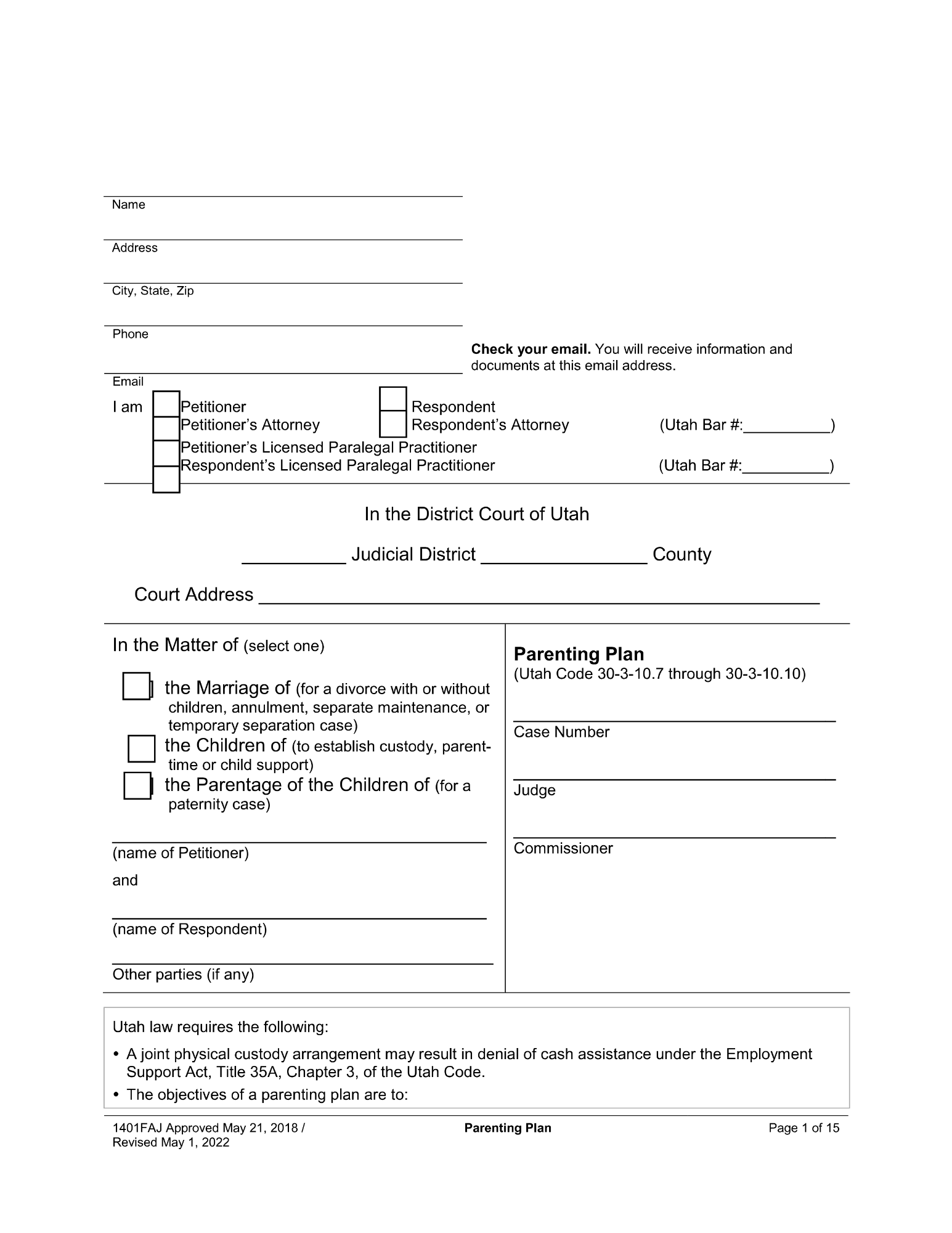
- Joint Custody Agreements: When both parents have joint custody, decisions regarding significant aspects of the child’s life, such as education, typically require mutual agreement. This means that both parents must agree on the school the child attends, as stated in your custody agreement. In Utah, joint custody orders are governed by (UT Code § 81-9-205), and parenting plans, including education provisions and the dispute resolution process parents must follow, are governed by (UT Code § 81-9-203).
- Best Interests of the Child: Courts generally prioritize the child’s best interests when making decisions about custody and schooling. If the current school environment is negatively impacting your daughter’s mental health and well-being, this could be a significant factor in any legal discussions or proceedings. Utah’s best interest factors are listed in (UT Code § 81-9-204).
- Parental Rights and Responsibilities: Both parents have the right to be involved in major decisions affecting their child’s life. If one parent’s decision is infringing on the other’s legally allocated time or rights, it may be necessary to revisit the agreement or seek legal intervention.
Let me know if you have any questions or clarifications.
It does say for mediation, however currently I’m am a full time college student obtaining my bachelor’s degree in psychology on December and then I’m going to graduate school for social work in the fall I want to make sure it’s worth the investment.
Great, thank you. It is in her best interests as she claims she has no friends at that school, no one to hang out with after and I am not getting my full time with her.
I understand your concerns about your daughter’s well-being and the impact on your parenting time. Here are some steps you can consider to address the situation:
- Review the Custody Agreement - Since your custody agreement requires mutual consent for educational decisions, it’s crucial to revisit this document. Ensure you fully understand the terms and any clauses related to dispute resolution, such as mediation.
- Initiate Mediation - Given that your agreement mentions mediation, this could be a constructive step. Mediation can help both parties discuss their concerns in a neutral setting and work towards a mutually agreeable solution. It’s often less adversarial than court proceedings and can be quicker and less costly.
- Document the Impact - Keep a detailed record of how the current school situation affects your daughter’s mental health and your parenting time. This includes any instances of bullying, her social interactions, and the travel time involved. This documentation can be valuable in mediation or if legal action becomes necessary.
- Explore Alternative Schools - Research schools within your home school district that might better suit your daughter’s needs. Having specific alternatives can strengthen your position by showing that you’re considering her best interests.
- Consult a Family Law Attorney - If mediation doesn’t resolve the issue, consulting with a family law attorney can provide guidance on your legal options. They can help you understand the potential outcomes and prepare for any necessary legal proceedings.
- Consider the Long-Term Impact - Think about how the current situation might affect your daughter’s long-term well-being and your relationship with her. This perspective can guide your decisions and discussions with her father.
Please let me know if you have further questions.
Also, one more question.... If he is not willing to. Can I submit for mediation without his consent?
You can typically initiate mediation on your own, even if the other party is initially unwilling. Mediation is often a voluntary process, but if it’s stipulated in your custody agreement, you might be able to request it through the court. The court can then encourage or order both parties to participate in mediation to resolve disputes.
I hope I was able to help resolve your issue! If you have any other questions, feel free to ask.
AND since we both live in our home school district if I say not to an out of boundary school she would HAVE to attend one there correct?
If both parents have joint custody and the agreement requires mutual consent for school decisions, then theoretically, if you do not agree to an out-of-boundary school, your daughter would need to attend a school within your home school district. However, it’s important to ensure that any decision aligns with the custody agreement and legal requirements. Consulting with a family law attorney can provide clarity on how to proceed in such situations.
Perfect thank you. And you’re a licensed attorney correct?
Yes, I am.
Thank you, that’s all!
I’m glad I could help! If you have any more questions in the future, feel free to reach out. Have a great day!
Hi, follow up question. With my daughter going to a school out of boundaries and I do say no to her going next year. Is he still able to make her go to that same school? Or what does the law say doe that?
In a joint custody situation where both parents must agree on educational decisions, if you do not consent to your daughter attending an out-of-boundary school, her father would typically not be able to unilaterally decide to keep her there.
The law generally requires both parents to agree on such decisions, especially if it’s specified in your custody agreement. If there’s a disagreement, mediation or legal intervention might be necessary to resolve the issue.
What would be the circumstances that he would be able to.
If both parents have joint custody and the agreement requires mutual consent for educational decisions, the father would generally not be able to make a unilateral decision about schooling without your agreement. However, there are a few circumstances where he might be able to:
- Court Order: If he believes that attending the current school is in the best interest of your daughter, he could petition the court to make a decision. The court would then evaluate the situation based on the child’s best interests.
- Emergency Situations: In rare cases, if there is an immediate need or emergency that requires a quick decision, he might be able to act temporarily until a formal agreement or court decision is made.
- Mediation or Arbitration: If the custody agreement includes a clause for mediation or arbitration in case of disputes, he might seek to resolve the issue through these channels, which could lead to a decision being made without your direct consent if you do not participate.
- Agreement Modification: If there has been a modification to the custody agreement that allows for unilateral decisions in certain circumstances, he might be able to act based on that.
As a mother who works in education and pursuing her master’s degree In social work and is able to take care of every need plus more would he qualify for an exception?
In general, exceptions to joint decision-making in custody agreements are not typically based on one parent’s qualifications or career. Instead, they are more likely to be based on the child’s best interests, as determined by a court.
Your qualifications and ability to care for your daughter are certainly important factors, but they would not automatically grant an exception to the need for mutual consent in educational decisions.
If your daughter’s father seeks an exception, he would likely need to demonstrate to a court that the exception is in your daughter’s best interests. This could involve showing that the current school provides unique benefits that are not available elsewhere, or that changing schools would be detrimental to her well-being.
Okay.... Good, as they should be her best interest which I am supporting but he doesn’t want because of convience for him. How do I get a GAL for her?
To obtain a Guardian ad Litem (GAL) for your daughter, you would typically need to file a motion with the court requesting the appointment of a GAL. This is often done in cases where there are disputes about the child’s best interests, and a GAL can provide an independent assessment to the court.
Here are the general steps you might follow:
- Consult with an Attorney: It’s often helpful to consult with a family law attorney who can guide you through the process and help you file the necessary paperwork.
- File a Motion: You or your attorney would file a motion with the court requesting the appointment of a GAL. The motion should explain why a GAL is needed and how it would benefit your daughter.
- Court Hearing: The court may hold a hearing to consider your request. During the hearing, you can present your reasons for wanting a GAL and any evidence supporting your case.
- Court Decision: If the court agrees that a GAL is necessary, they will appoint one to represent your daughter’s best interests.
I hope this helps! If you have any other questions, feel free to ask.
Awesome! Thank you! Should I be nervous for mediation or is it pretty standard for this circumstance? I just want the best outcome for her
Mediation is a common and often effective way to resolve disputes in custody cases. It’s designed to be a less formal and more collaborative process than going to court. The goal is to find a solution that works for everyone, especially your daughter.
It’s natural to feel a bit nervous, but remember that mediation is about open communication and finding common ground. You’ll have the opportunity to express your concerns and priorities, and the mediator will help facilitate the discussion.
Focus on your daughter’s best interests, and try to approach the process with an open mind. It’s a chance to work towards a resolution that benefits her well-being.
And If the other party lies.... Does he need to prove it? I worry about that.
In mediation, the focus is on reaching a mutual agreement rather than proving facts like in a court trial. However, honesty and transparency are important for the process to work effectively.
If you believe the other party is not being truthful, you can bring this up during mediation. The mediator can help address discrepancies and encourage both parties to be open and honest.
If mediation doesn’t resolve the issue and the case goes to court, then evidence and proof become more critical. In court, each party would need to support their claims with evidence.
It’s always a good idea to keep records and documentation of any relevant information, just in case you need to present it later.
Okay, that makes me feel better. Thank you!
I’m glad I could help put your mind at ease! If you have any more questions or need further assistance, feel free to reach out.
Just a friendly reminder: Don’t hesitate to reach out whenever you need assistance!
Disclaimer
By messaging FreeLegalAdvice.com, you agree to our Terms and have read our Privacy Policy.
The information provided on AskaLawyer.com is for general informational purposes only and does not constitute legal advice. While we strive to ensure the accuracy and timeliness of the information presented, we make no guarantees regarding its completeness or applicability to your specific circumstances.
Use of this website does not create an attorney-client relationship between you and FreeLegalAdvice.com or any of its attorneys. Communications through this website, including any responses from attorneys, are not privileged or confidential. For advice tailored to your individual situation, we recommend consulting a licensed attorney in your jurisdiction.
FreeLegalAdvice.com disclaims any liability for actions taken or not taken based on the content of this site. We are not responsible for any third-party content that may be accessed through this website. Reliance on any information provided herein is solely at your own risk.


