
 Upgrade plan
 Cancel plan
 Settings
 Change Password
 Contact Us
[IL] Can an employee negotiate severance or claim constructive discharge?
 28
 9



Full conversation
I am seeking advice regarding my employment situation and whether I have any legal rights or leverage to negotiate a severance agreement or preserve my eligibility for unemployment benefits. Over the past 4 years, my role expanded well beyond my official position. At the request of leadership, I developed and managed many of the company’s Learning and Development and knowledge management initiatives, including building a Learning Center, creating and validating SOPs, maintaining more than 130 Knowledge Articles, coordinating onboarding and training, supporting continuing education initiatives, and leading the validation of our Knowledge Base before its migration to a new platform. My manager publicly referred to me as the company’s “unofficial L&D team.”
I have extensive documentation supporting these responsibilities, including emails, meeting transcripts, project updates, internal chat conversations, performance recognition, and documentation of my involvement in cross-functional projects.
Earlier this year, I was advised not to pursue another management opportunity because I was told an education path would be a better fit. The company created an Education Coordinator role that encompassed all the things I had already been doing, with 8 additional hours during my normal responsibilities and no extra pay. While my application for that position was still pending, my current position was restructured. I lost my Lead designation and was told I would need to reapply for a new Lead role with a completely different schedule. I also requested an updated job description but was told it was still being developed.
The cumulative effect of these events has significantly affected my confidence in my future with the company and has had a substantial impact on my mental health. I have preserved contemporaneous documentation throughout this process.
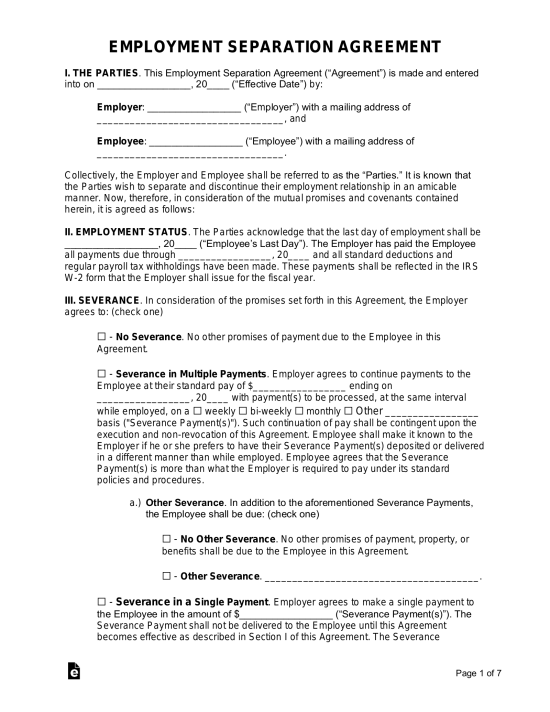
My questions are: Do these facts present any potential legal claims under Illinois or Texas law? Do they provide leverage to negotiate a severance package? If I choose to resign, how might these facts affect my unemployment eligibility? Would you recommend negotiating a separation agreement before resigning? And is there any additional documentation I should preserve?


I’m sorry to hear about the challenges you’re facing. Have you already discussed your concerns with your employer or HR regarding the changes to your role and responsibilities?
They have scheduled a meeting today at the end of my shift. When I learned about the removal of my title after seeing the internal job posting, I asked if that meant I was no longer a Lead. They said yes but told me I would still have the same responsibilities. When I asked for a job description they told me it was still being developed. I have everything documented including emails, chats, and recorded meetings.
Have you documented any communications or feedback from your manager or leadership that could support your claims about your expanded role and the restructuring?
Yes.
Is there anything else the Employment Lawyer should know before I connect you? Rest assured they’ll be able to help with your employment situation.

Hello! My name is TJ, and I’m an attorney with over 20 years of experience. Thanks so much for the opportunity to assist you!
Based on what you’re describing, you likely have leverage here. The demotion without a job description, combined with the expanded responsibilities you documented and the schedule changes, could support a constructive discharge claim or at minimum give you negotiating power for severance. In Texas, if you resign due to intolerable working conditions, you might still qualify for unemployment benefits, though the burden is on you to prove it was unreasonable. Before that meeting, I’d clarify one thing: has the company indicated whether they’re offering any severance, or is this purely a restructuring they’re presenting as a done deal?
The restructuring is being presented as a done deal. They are not adjusting my pay and my responsibilities would be the same. They do not have a severance policy that I am aware of.
I also have a question regarding a Learning Center that I personally built while employed by the company. The Learning Center was created using my own Canva Pro account, which I personally paid for at approximately $25 per month. I used it to create and host company training materials, onboarding resources, and educational content. Before my subscription renewed, I asked the company whether they wanted to assume the subscription or otherwise pay to continue using the Learning Center. I did not receive a commitment, so I allowed my personal subscription to lapse. As a result, many of those assets are no longer accessible without reactivating my Canva Pro subscription or paying to license certain premium elements. I estimate that relicensing those premium elements individually would cost several hundred dollars. Who likely owns the Learning Center and its contents? Do I have any legal obligation to restore access? What are my obligations if the company later requests the materials? And should I avoid making any changes until I receive legal advice?
I have a meeting scheduled with my manager today at the end of my shift to discuss the recent role restructuring. The agenda includes a follow-up on role clarification, discussion of concerns and expectations, communication pathways, and next steps. I would like advice on how to handle this meeting.
On the Canva issue: you likely own the Learning Center since you created it on your personal account with your own subscription. Work product ownership is generally determined by who owns the tools and accounts used to create it. The company did not pay for the subscription or the account, so they probably do not have ownership rights unless there is a written agreement saying otherwise. You have no obligation to spend your own money to restore access or reactivate your subscription. Do not delete or destroy anything. Keep records of what you created and when. If they ask for it later, you can negotiate what that handoff looks like, including whether they reimburse you for relicensing costs.
For the meeting: listen first. Get the job description if they have one. Do not commit to anything on the spot. If they pressure you to accept the new role immediately, say you need time to review the details and consider your options. Document everything discussed. One question that would help me advise you better: when they demoted you, did anyone from HR or leadership give you a reason in writing, or was it just verbal?
They posted an internal job for leads so I asked via email if that meant I no longer had the title. The manager replied that was correct, and when I asked if that meant I was demoted without being told, the manager responded that I should think of it as a restructuring. This was all over email and I have it saved. There is no written agreement for the Canva site. They knew about it, loved using it to train new staff and educate current staff, but never officially wanted to take over ownership. I have an email saved showing they wanted to import it into a new platform but gave a “we will get back to you” on paying for it. I subsequently cancelled the subscription and the site is no longer active. I still have all the content but cannot publish it because of the premium elements.
Here is what you need to know going into this meeting and beyond.
You are in a stronger position than you might think. The email trail showing the manager called it a “restructuring” rather than a demotion is actually helpful to you. It shows the company was being evasive about what happened, which supports your argument that this was a demotion disguised as something else. Combined with the fact that your responsibilities stayed the same but your title did not, you have documentation of what looks like a constructive change in employment terms. That matters for both severance negotiation and unemployment eligibility.
On the Canva situation, you did exactly the right thing. You asked them to commit to paying for it, they responded with “we will get back to you,” and you made a reasonable business decision to cancel your personal subscription. You do not owe them access to materials you created on your own account using your own funds. The fact that they wanted to import it into their platform but never committed to paying for it shows they knew it was not their property. Keep those emails. The content is still yours. If the company wants to use those materials, they can either pay to relicense the premium elements or recreate them.
For the meeting itself, listen to what they say. If they offer a job description, take it and say you need time to review it before committing to anything. Do not agree to a new schedule or role on the spot. If they ask why you are hesitating, you can say: “I want to make sure I understand the full scope before I commit, especially since I have not had a written job description for the restructured role.” If they bring up severance, listen carefully and do not negotiate in the moment. If they do not bring up severance, you can raise it yourself by saying: “Given the changes to my role, title, and schedule, I would like to understand whether there is a severance package available.”
Document everything from this meeting. If it is virtual, check whether you are able to record it. Either way, follow up with an email summarizing what was discussed to create a paper trail.
Under Illinois Employment Contract Act, 820 ILCS 90, Illinois recognizes stronger employee protections than Texas, including implied contract claims and broader whistleblower protections under the Illinois Whistleblower Act, 740 ILCS 174. The pattern you have documented, including expanded responsibilities, promises that did not materialize, a title removal without notice, and a schedule change you were not consulted on, creates a foundation for both a constructive discharge claim and retaliation claims if disciplinary action follows your complaints.
On the Canva site they did not start the import process yet, it was only discussed as a future project. I validated and handed over 100 SOPs to them to be imported into the new platform, and the next week is when the title change happened. The manager also went out of town the same day she posted the internal lead positions. I have months of a paper trail, recorded meetings, and screenshots of internal chats showing everything I was doing for the company. They made many promises and kept my hopes up but nothing ever materialized as I continued to work far and above my role.
That timeline is actually really important. You handed over 100 SOPs, the job openings were posted, and the manager left town right after the title change. That sequence looks like a coordinated move, not a coincidence. Combined with months of documented promises that never materialized, you have a pattern showing they were extracting your work while planning to remove your title and leverage. Keep all of that together. The recordings, screenshots, emails, and the timeline all tell a story. That is exactly what you would need if this goes to negotiation or if you end up filing for unemployment and they contest it. Is there anything else you would like to talk through before the meeting, or do you feel ready?
Here is the email chain. The manager confirmed that my Lead title was being removed as part of a restructuring. When I asked directly whether that meant I had been demoted without being told, the manager said to think of it as a restructuring of the team and indicated she hoped I and a coworker would consider applying for the new Lead roles. When I pushed back and explained that my previous title had been Clinical Liaison Lead and that CL3 was presented as the Lead role when the career ladder was introduced, the manager maintained that it was a restructuring rather than a demotion, acknowledged there was no expected pay change, and stated the CL3 job description was still being finalized. When I asked whether I could at least see a job description so I could restructure my workload, the manager stated the revised CL3 expectations were still being reviewed and could not be shared yet.
That email chain is valuable evidence. The manager is trying to reframe a demotion as a restructuring while simultaneously admitting she is removing the Lead title, taking scheduling responsibilities away, and removing knowledge base responsibilities. She is also admitting there is no finalized job description, which means you are being asked to accept a role without knowing what it actually is. Your pushback was exactly right. You called out the contradiction directly, and her response shows she knows it looks like a demotion but is trying to characterize it differently. That matters legally. Keep this entire chain. You are ready for the meeting.
Following our earlier conversation, I wanted to provide an update after my meeting. During the meeting, I was informed that leadership considered my recent emails regarding the restructuring to be unprofessional and that the manager had been directed to give me what she described as a “kind of a formal warning.” However, she also stated multiple times that this concern was not coming from her personally and acknowledged she understood my frustration.
When I asked for specific examples of what was considered unprofessional, none were provided. The manager stated that the primary concern was my written communications about the restructuring, including my characterization of the change as a demotion. Throughout the meeting, the manager repeatedly acknowledged that I had taken on responsibilities well beyond my official role, that I had been performing Learning and Development work in addition to my regular duties, that she believed I was valuable to the company, and that she believed I was “worth my weight in gold.” She also stated that she personally wanted me to build and run Learning and Development but that leadership was concerned about how my recent frustration had been communicated.
I was informed that I was not selected for the Education Coordinator position. I asked whether the finalized CL3 job description had been completed and was told it still had not been finalized. I declined to agree to any expectations regarding the revised role until I could review the finalized written job description.
Near the end of the meeting, the manager stated that if I ultimately decided the position was no longer right for me, she would provide a strong letter of recommendation and acknowledged that sometimes employees outgrow an organization.
My questions are: Does receiving a formal warning without specific documented examples of misconduct have any legal significance? Does the company’s acknowledgment that I was performing substantially more work than my official role while simultaneously restructuring my position strengthen my severance negotiating position? Does the timing of informing me I was not selected for the Education Coordinator role, together with the criticism of my written complaints about the restructuring, raise any legal concerns? And should I continue working while waiting for the finalized job description or begin negotiating a separation before making any decision to resign?
I did not get the Education Coordinator role because they did not like that I called the situation a demotion.
I also have the written coaching documentation the manager sent after the meeting. It states the formal coaching is being documented because my escalation and communication approach did not meet expectations. The concern referenced is my written communications about the restructuring and my characterization of the change as a demotion, as well as my decision to reach out to the head of operations while the manager was out of town. The document also acknowledges my meaningful contributions, my 13% compensation increase, and that I was not selected for the Learning and Development assignment. It states that future opportunities will require demonstrated improvement in communication, patience, adaptability, and professional judgment.
I did have the official Lead title for 3 years and have a meeting recording where I am introduced as a Lead.
I was told in the meeting that I did not receive the Education Coordinator role because my inquiry regarding the demotion was considered unprofessional and that it was unprofessional to ask for a job description that still has no finalized version. I was told that if I chose to resign they would write me a good letter of recommendation, but if I chose to stay I would have to have weekly coaching on my communication and accept additional projects, and I would not be promoted or offered another opportunity until I displayed a sufficient level of trust. I also asked the head of operations a question because she had told me in a meeting that if something was important I could come to her directly without waiting for the manager. I am now being formally written up for following those instructions.
Let me walk you through what just happened here, because this meeting created significant legal issues for the company.
Start with the formal warning itself. They documented a corrective coaching for unprofessional communication, but when you asked for specific examples, they had none. In employment law, vague discipline without concrete examples is weak. It looks retaliatory, especially when the “unprofessional” conduct was asking legitimate questions about your job title and requesting a job description. Asking for clarification on whether you were demoted and requesting a written job description are not insubordinate acts. They are reasonable employee questions. The fact that they cannot point to anything disrespectful, abusive, or actually unprofessional undermines the entire warning.
Now look at the timing and pattern. You asked about the demotion, received a vague response, asked for a job description, and then did not get the Education Coordinator role. The written documentation even says the decision was connected to how you communicated about the restructuring. Under the Illinois Whistleblower Act, 740 ILCS 174, employers cannot punish employees for complaining about adverse employment actions or asking for clarification about their job duties. What you did was protected activity. Asking “am I demoted?” and “can I see my job description?” are not policy violations.
The coaching requirement is also problematic. They are telling you that you need to demonstrate a level of trust before you get any future opportunities, but they will not give you the job description you asked for, and they are penalizing you for asking the head of operations a question when your manager was out of town following instructions you were explicitly given. That is not a reasonable employment expectation.
The company has now created a paper trail showing they are making employment decisions based on your complaints and questions about the restructuring, not based on actual misconduct. The written warning references your escalation of concerns about the demotion and your request for a job description as the reason you were not selected for the Education Coordinator role. That is documented retaliation.
On severance negotiation, this significantly strengthens your position. You have evidence that they are punishing you for questioning the restructuring, a manager who said you are “worth your weight in gold” and would give you a strong letter of recommendation if you leave, acknowledgment that you performed work well beyond your role, and a formal written document connecting your exclusion from the Education Coordinator role directly to your communication about the demotion. That is leverage.
On unemployment, if you resign now, you have a much stronger case for constructive discharge. The company removed your title, changed your schedule without your agreement, removed responsibilities, gave you a formal warning for asking legitimate questions, denied you a promotion because you questioned the restructuring, and is now requiring coaching as a condition of future employment. Under Illinois unemployment rules administered by the Illinois Department of Employment Security, leaving due to a pattern of adverse employer actions that would cause a reasonable person to resign can qualify as leaving for good cause. Your situation likely meets that standard.
Do not sign anything further. Do not agree to the coaching requirement. Document everything from this meeting, including the fact that no examples were provided when you asked for them. Keep the written warning. Then decide whether to negotiate severance or resign. Given what has happened, I would lean toward negotiating first.
The company is based in Illinois. Does that affect anything?
Yes, it changes things meaningfully. Illinois has stronger employee protections than Texas. Illinois recognizes implied contracts, has broader whistleblower protections, and courts there are generally more protective of employees in retaliation cases. The fact that the head of operations told you to ask her anything while your manager was out of town makes the written warning even weaker because they cannot penalize you for following instructions from leadership. That transcript is crucial. It directly contradicts the claim that you violated chain of command. Illinois also has different unemployment rules: if you resign due to intolerable working conditions created by the employer, you are likely eligible for benefits under 820 ILCS 405. The pattern here strengthens your position for negotiating severance because an Illinois employer facing potential retaliation claims and unemployment liability has more incentive to settle.
What are the next steps?
Here is the path forward. First, gather everything. Organize all emails, transcripts, internal chat messages, recordings, and the written warning in one place and back them up. Second, do not agree to the coaching requirement yet. If they push, respond in writing that you want to understand the specific expectations and examples before committing. Third, find a local employment attorney in Illinois and bring all your documentation. They will review it and advise on whether you have a retaliation claim and how strong it is, as well as severance negotiation strategy specific to Illinois law. Fourth, based on that attorney’s advice, decide whether to approach the company about severance or resign. Do not make that move without legal guidance on how it affects your unemployment claim and any potential claims you have.
Disclaimer
By messaging FreeLegalAdvice.com, you agree to our Terms and have read our Privacy Policy.
The information provided on AskaLawyer.com is for general informational purposes only and does not constitute legal advice. While we strive to ensure the accuracy and timeliness of the information presented, we make no guarantees regarding its completeness or applicability to your specific circumstances.
Use of this website does not create an attorney-client relationship between you and FreeLegalAdvice.com or any of its attorneys. Communications through this website, including any responses from attorneys, are not privileged or confidential. For advice tailored to your individual situation, we recommend consulting a licensed attorney in your jurisdiction.
FreeLegalAdvice.com disclaims any liability for actions taken or not taken based on the content of this site. We are not responsible for any third-party content that may be accessed through this website. Reliance on any information provided herein is solely at your own risk.


