
 Upgrade plan
 Cancel plan
 Settings
 Change Password
 Contact Us
[AZ] Can worsening symptoms after post-accident medical treatment support a medical malpractice claim?
 20
 7



Full conversation
I am seeking an objective evaluation regarding whether I may have experienced medical negligence, improper medical management, or harm related to treatment recommendations and interventions following my car accident on 3/24/2025. The motor vehicle portion of the accident has already been settled and released. My concerns are specifically related to the medical management and the progression of symptoms and complications afterward.
Prior to these interventions and treatments, I was functioning at a different baseline. Following treatment, I experienced significant worsening in several areas, and I have concerns regarding:
- informed consent
- pressure toward procedures or treatment decisions
- inadequate consideration of my concerns and symptoms
- possible failure to fully evaluate alternatives, risks, or outcomes
- the overall standard of care provided
I am trying to approach this carefully, factually, and professionally. I understand that a poor outcome alone does not necessarily constitute malpractice. My concern is whether the decision-making, recommendations, consent process, or execution of care may have fallen below acceptable standards.
I have been organizing documentation, including:
- medical records
- imaging and reports
- billing records
- treatment timelines
- symptom progression logs
- communications and notes
- procedure dates
- records documenting my condition before and after treatment
My goal today is to understand:
- whether this situation appears legally and medically significant
- whether it is worth formal investigation
- what additional documentation would be most important
- whether independent medical evaluations would be advisable
- and what steps I should or should not take moving forward
Important comparison points I am documenting include:
Before treatment/intervention:
After treatment/intervention:
Major symptom changes:
Functional losses or limitations:
My questions:
- Do you believe this warrants further investigation?
- What records are most important?
- Are there weaknesses or challenges you immediately see?
- Should I avoid speaking further with prior providers?
- Would an independent specialist review strengthen understanding of the case?
- What timelines or legal limitations should I be aware of?
I also believe it may be important to mention that during portions of this process, I felt pressure and guidance from prior legal counsel that may have influenced how some medical concerns were documented or addressed.
I do have email documentation showing that at one point I was attempting to have certain concerns or information included in my medical records, and I was advised against doing so. I am not making accusations or conclusions regarding intent, and I understand there may have been strategic reasoning behind that advice at the time. However, in hindsight, I believe this may be relevant because it potentially affected the completeness and contemporaneous documentation of my concerns, symptoms, or objections.
Part of why I am seeking an independent review now is to better understand whether important information may have been insufficiently documented during the course of treatment and whether that impacted my ability to advocate for myself medically.


I understand how concerning it must be to navigate the complexities of your medical treatment and its aftermath. Can you share if you have already consulted with any medical professionals or legal experts regarding your situation?
I have no money to go to a doctor and have no other lawyers for this subject.
Have you gathered all relevant documentation, including any communications with your previous legal counsel, that may help in evaluating your case?
Because of my brain injury, it took me a very long time. I only have text messages to gather, which I hope to have help from my husband with tonight.
Is there anything else the Lawyer should know before I connect you? Rest assured they’ll be able to help with your medical negligence concerns.
No.

Hello, welcome to our service. My name is Legal Eagle. I’ve been a lawyer for over 20 years. I’m happy to help if I can.
I couldn’t see your zip code from the chat above. Can you please give me your zip code again?
Hello, I am very grateful. [location redacted], AZ.
Thanks for the info. I will do my best to help today. (Please note this discussion is for general info only and does not constitute an attorney-client relationship or legal advice.) Just a moment please while I finish my review and prepare some information for you that I hope will be helpful.
You’re asking for an objective read on whether the medical care that followed your March 24, 2025 accident may have crossed from a bad outcome into actionable negligence, what to gather, whether an independent review makes sense, and what deadlines apply. You’ve separately raised that prior legal counsel may have steered how some of your medical concerns were documented.
I’ll take the medical question first, then the documentation issue, then deadlines and next steps.
The legal standard, in plain terms. A poor result is not malpractice, and you’ve already recognized that, which is the right starting point. In Arizona, a medical negligence claim requires four things: that the provider owed you a duty, that the care fell below the accepted standard of care for that specialty, that the substandard care caused your injury, and that you suffered damages as a result. The two that decide most cases are the second and third: a deviation from the standard of care, and causation. Arizona’s statute on the necessary elements of proof (A.R.S. § 12-563) sets out exactly these two requirements. Both almost always have to be proven through testimony from a qualified medical expert, not through the patient’s own account, however detailed.
Arizona codifies this. A standard-of-care expert generally must be licensed and must have practiced or taught in the same specialty as the provider you’re questioning within the year before the care at issue (A.R.S. § 12-2604). And once a malpractice suit is filed, the claimant has to serve a preliminary expert opinion affidavit supporting the claim (A.R.S. § 12-2603). That affidavit is a filing-stage requirement, not a pre-suit deadline, but it tells you the practical reality: no case moves without a supportive expert.
Informed consent and pressure are their own theories. Your concerns about consent and about being pushed toward procedures are recognized separately from ordinary negligence. Arizona law requires that a provider disclose the risks, benefits, and reasonable alternatives that a reasonable patient would want in deciding whether to proceed. A consent claim turns on what you were told, what you would have decided if properly informed, and whether the undisclosed risk is the one that materialized. The signed consent forms, and any note in the chart describing the consent discussion, are central evidence here, which is why they matter as much as the operative records.
The hardest part of your situation is causation, and it ties to the settled auto case. Because your symptoms trace back to a car accident, the defense in any medical claim will argue that your worsening flows from the original collision rather than from the treatment. Untangling pre-treatment baseline from post-treatment decline is exactly where your symptom logs and your before-and-after records do real work, and it’s also where an independent expert is essential.
The settled and released auto portion adds a wrinkle. In Arizona, an at-fault driver can be held responsible for the aggravation of injuries caused by negligent later treatment, which means some of what a medical claim would seek may overlap with what your auto settlement already compensated. Whether your release bars or merely complicates a claim against the medical providers depends entirely on its wording: who it named, what it released, and whether providers were included. That document needs to be read closely before anyone can tell you where you stand. Do not assume it forecloses a medical claim, and do not assume it doesn’t.
Deadlines, which are the most time-sensitive thing in your message. Arizona gives you two years to file a medical malpractice suit (A.R.S. § 12-542). The clock runs not necessarily from the date of treatment but from when you knew, or with reasonable diligence should have known, that an injury was caused by negligence (the discovery rule). Arizona has no outer statute of repose for these claims, so there is no automatic hard cutoff years out, but the two-year discovery clock is fact-specific and may already be running from the point your symptoms clearly worsened. There is also a tolling provision for a person of “unsound mind” (A.R.S. § 12-502), which can pause the clock, but Arizona courts apply it narrowly: the incapacity generally must have existed when the claim accrued, physical injury alone is not enough, and the burden is on you to prove it with medical documentation. Given your brain injury, this is worth raising with an attorney, but treat the two-year period as live and act as if the clock is running.
On the documentation and prior-counsel issue. You’re right that it may be relevant, and you’re right to frame it without accusation. Its main significance is evidentiary. If contemporaneous records of your concerns, symptoms, or objections are thinner than they should be, that affects how well your case can be reconstructed, and the emails you describe could help fill that gap by showing your concerns existed in real time even if they didn’t make it into the chart. Separately, advice that affected your ability to document or advocate could in some circumstances raise its own legal-malpractice question, which is a distinct claim with its own elements and its own deadline (generally two years, often running from when the underlying matter concluded or the harm became apparent). I’m flagging it, not concluding it. It would need its own evaluation, and you should not let it distract from preserving the medical timeline.
Now to your specific questions.
Does this warrant investigation? No one can responsibly tell you yes or no from a narrative alone, and anyone who does is guessing. What I can say is that the markers that justify a formal look are present: a documented change in baseline, identifiable procedures and dates, consent concerns, and records you’ve already organized. That is enough to justify having a qualified expert review the file, which is the only thing that converts concern into an answer.
Which records matter most? The complete medical records from every provider involved (not a summary, the full chart), the operative and procedure notes, the signed consent forms and any charted consent discussion, all imaging together with the radiologists’ written reports, your before-and-after functional documentation, and the auto settlement release. Your symptom logs and the emails and texts are valuable corroboration. Request records in writing and keep proof of every request. Arizona law gives patients the right to obtain their own medical records (A.R.S. § 12-2293), as does the federal HIPAA right of access (45 C.F.R. § 164.524).
Weaknesses I’d flag immediately. The need for a supportive same-specialty expert; causation against the backdrop of the original accident; the release and possible damages overlap; and the documentation gaps you’ve identified, which cut both ways.
Should you stop talking to prior providers? You’re entitled to your records, so keep requesting those. Beyond that, be careful: don’t give recorded statements, don’t sign new authorizations you don’t understand, and don’t argue the merits with the providers or their staff. Continue any care you actually need for your health; this caution is about the dispute, not your treatment.
Would an independent specialist review help? Yes. It isn’t just helpful, it’s effectively the gatekeeper. An independent review is how standard of care and causation get established, and it’s what an attorney will want before committing.
Timelines. The two-year limit above is the one to protect now.
A practical point on cost, since you mentioned you have no money for a doctor or another lawyer. Medical malpractice cases are typically handled on contingency, meaning the attorney is paid from a recovery rather than up front, and the firm usually advances the cost of the expert review and any independent evaluation. So the expert review you need is generally something a law firm funds, not something you pay for out of pocket. That changes what “I can’t afford it” means here. Your immediate task is preservation and organization, not paying for evaluations. Given the two-year clock, the most useful step you can take is to get the file in front of an Arizona medical malpractice attorney for a free intake review soon, even before the documentation is fully assembled.
If it would help, I can draft a plain medical records request letter you can adapt and send to each provider to start pulling the complete file, including imaging and reports. Tell me whether you’d like that and I’ll prepare a template. If you think that would be helpful, just let me know.
Yes, you can send the template. Is this for the one provider that I am questioning, or for all medical care and treatments?
Also, I would like, in correlation to this medical event, a good objective look at the attorney that represented me. It is my strong opinion that he put pressure on me to make the decision after many times I was more than clear that I was not comfortable and that I was not being disclosed the full risks from the medical place.
This is for all providers, not just the one you’re questioning. For a worsening-after-treatment claim where causation is contested against the original accident, the expert needs the full picture: the baseline before, the decline after, and every hand that touched the relevant care. The provider ultimately at fault may not be the obvious one, responsibility can be shared, and imaging and radiology reports frequently sit at separate facilities from the treating clinic. So you should send a copy to each provider connected to the accident and its treatment: the questioned provider, any hospital or surgical center, imaging facilities, specialists, primary care, and any rehab or therapy.
Sample medical records request letter
[Your full name]
[Your address]
[City, State, ZIP]
[Phone] · [Email]
[Date]
[Provider or facility name]
Attn: Medical Records / Release of Information
[Provider address]
[City, State, ZIP]
Re: Request for complete medical records
Patient: [Your full legal name]
Date of birth: [DOB]
Approximate dates of care: [start] to [present]
To the Medical Records Custodian:
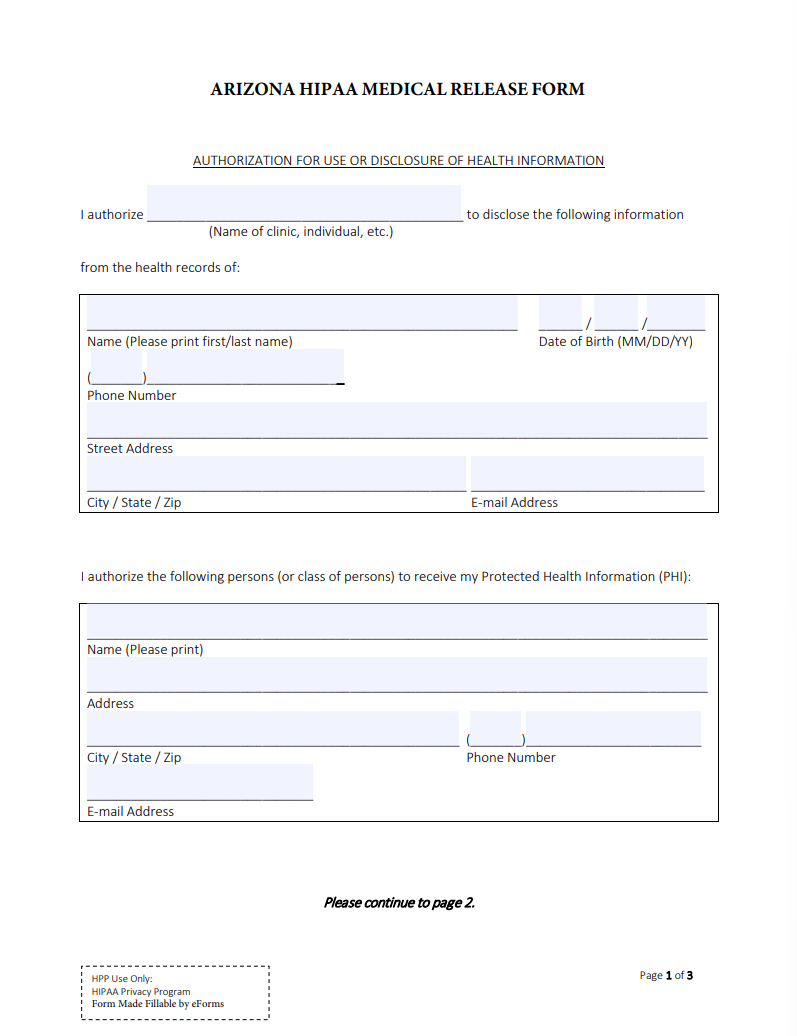
I am requesting a complete copy of my medical records from your office or facility. I am the patient and I am making this request on my own behalf. A signed authorization is enclosed.
Please provide the entire record, not a summary or abstract, including the following to the extent you hold them:
- All office, clinic, hospital, and progress notes
- All consultation, history, and physical examination notes
- Operative and procedure notes, anesthesia records, and discharge summaries
- All signed consent forms and any notes documenting consent discussions
- All diagnostic imaging together with the radiologists’ written reports (please include any X-ray, MRI, CT, or ultrasound images on disk or by electronic transfer, along with the reports)
- All laboratory and test results
- All medication and prescription records
- All referrals, orders, and communications in the file
- All billing and itemized statements
- Any correspondence, messages, or notes to or from other providers in my file
Please provide the records in electronic format if available. If there is a fee for copying, please contact me with the amount before processing. I am experiencing financial hardship and ask that you reduce or waive the fee if your policy permits.
Please confirm receipt of this request and let me know the expected date the records will be ready. If any portion of the record is withheld, please state in writing what is withheld and the reason.
Thank you for your assistance.
Sincerely,
[Signature]
[Your printed name]
Enclosure: Signed authorization for release of records
A couple of details:
- You should keep a copy of every letter and note the date you sent each one.
- Most providers have their own authorization form, so it’s often fastest to call, ask them to email or mail their release form, and attach this letter to it.
Wow, thank you. I will do this immediately. Should I send these via USPS or via email?
Another reason I am seeking additional independent review is that I have concerns about the accuracy and completeness of certain portions of my medical records.
I possess documentation, including emails and other records, that I believe may call into question whether some events, discussions, or concerns were documented accurately or completely at the time they occurred. My goal is not to make accusations, but rather to understand whether the records accurately reflect what actually transpired and whether any discrepancies may be relevant to evaluating my case.
I also believe it is important to disclose an event that occurred during my final appointment related to my accident claim. This was the first time I met my attorney in person. He accompanied me into the examination room and participated in discussions with the provider regarding my condition and medical records.
During that appointment, I personally observed discussion regarding what information would be important in my medical records for purposes of making demands to the insurance company. I do not know the legal or medical significance of that interaction, and I am not suggesting wrongdoing. However, because I am now attempting to determine whether my records accurately and independently reflect my medical condition, I believe this event may be relevant and should be disclosed.
Additionally, pertaining to my attorney, I have emails, some texts, and I believe a recorded call by the attorney showing that when I attempted to have certain concerns or information documented in my medical records, I was advised not to pursue that request. Looking back, I am concerned that information I believed was important may not have been contemporaneously documented, and I would like guidance regarding whether that is significant from either a medical or legal standpoint.
So to recap, for these reasons I am seeking additional evaluation of: the accuracy and completeness of the medical record, the informed consent process, the medical decision-making involved by the attorney, and whether any aspect of my care and representation may have fallen below the applicable standards and ethics. I am not well, and my life is so hard right now trying to navigate what happened to me. I know you need to review, and I will get you what you need. I just wanted to get all this out so that I did not forget.
Call each place and ask where to send it, via email or mail.
Thank you so much. What is the best way to find a good malpractice attorney? Should I try and get one lined up while I wait for my records requests, or after?
My suggestion is to go to lawyers.com and find three lawyers near your location, with good online reviews. Stay away from the big firms, as they tend to charge a LOT more than the smaller firms or solo lawyers. Call all three and talk to them by phone, and then go with the one you like the best.
Disclaimer
By messaging FreeLegalAdvice.com, you agree to our Terms and have read our Privacy Policy.
The information provided on AskaLawyer.com is for general informational purposes only and does not constitute legal advice. While we strive to ensure the accuracy and timeliness of the information presented, we make no guarantees regarding its completeness or applicability to your specific circumstances.
Use of this website does not create an attorney-client relationship between you and FreeLegalAdvice.com or any of its attorneys. Communications through this website, including any responses from attorneys, are not privileged or confidential. For advice tailored to your individual situation, we recommend consulting a licensed attorney in your jurisdiction.
FreeLegalAdvice.com disclaims any liability for actions taken or not taken based on the content of this site. We are not responsible for any third-party content that may be accessed through this website. Reliance on any information provided herein is solely at your own risk.


