
 Upgrade plan
 Cancel plan
 Settings
 Change Password
 Contact Us
Is a non-compete enforceable when your employer loses its contract with the facility where you work?
 11
 3



Full conversation
Healthcare company I work for lost contract with a facility. New company taking over wants to hire me. I’m an APP. My contract with initial company at facility has one year non-compete. How enforceable would this be?


I understand how concerning a non-compete clause can be in your situation. Can you tell me how long you have been employed with the current healthcare company?
6 years.
Have you already received an offer from the new company, or are you still in discussions?
Discussion.
Is there anything else the Employment Lawyer should know before I connect you? Rest assured they’ll be able to help with your non-compete clause.
No.

Hello, and welcome to our service. My name is Daniel, and I’ve been a licensed attorney for over 22 years. I’m sorry you’re dealing with this situation, and I’ll do everything I can to help. It sounds like you’re concerned about the enforceability of a one-year non-compete clause with your current healthcare company after they lost a contract. Is that right?
Your situation raises an important question because your employer’s loss of the facility contract may affect how a one-year non-compete is viewed. Non-compete agreements are generally governed by state employment laws, and those laws differ widely. At the federal level, there is currently no nationwide ban on non-competes, although the Federal Trade Commission can still challenge unfair non-competes on a case-by-case basis under Section 5 of the FTC Act (15 U.S.C. § 45). In general, a restriction is more likely to be enforced when it is reasonable in length, geographic area, and the type of work it limits. Because you have worked there for six years and the new company wants to continue your role at the same facility, the key issues will likely be the exact wording of the agreement, the reason your employment relationship may change, and whether the restriction unfairly prevents you from continuing your healthcare career.
Your first option is to review the non-compete language carefully and determine exactly what it restricts. Look for whether it prevents you from working for any competing healthcare company, only limits work at that specific facility, or applies only within a certain geographic area. You should request a complete copy of your employment agreement, including any amendments or policies incorporated into it, and review the sections dealing with termination, loss of contracts, and post-employment restrictions. The narrower the restriction, the more likely it may be enforceable, while an overly broad restriction may be challenged depending on the applicable state law.
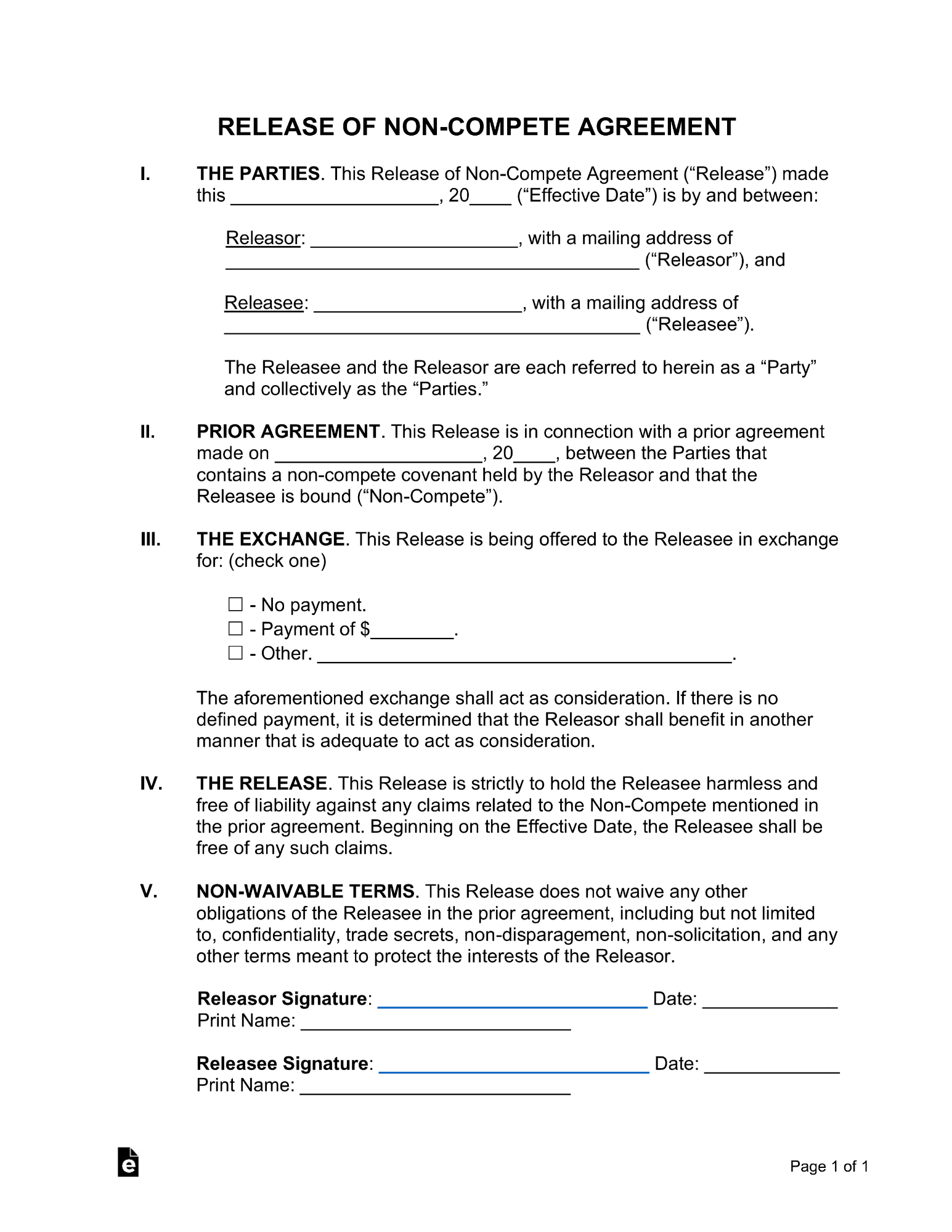
One possible approach is to negotiate directly with your current employer or the new company before accepting a position. Since your current company lost the facility contract, you may be able to ask for a written release from the non-compete or a waiver allowing you to continue working at that location under the new provider. You should avoid relying on verbal assurances and instead request any agreement in writing. The new company may also be willing to communicate with your current employer to resolve the issue because keeping experienced APPs in place can benefit everyone involved, including the facility and patients.
Another option may be to move forward cautiously with the new company while gathering more information about enforcement risk. Before signing anything with the new employer, you should provide them with the non-compete language and ask whether they are willing to address the restriction as part of the hiring process. You should also avoid taking steps that could be viewed as violating your current agreement until you understand the limits of the clause. If your current employer threatens enforcement, the specific wording of the contract and the state law that applies will be critical in determining whether they have a strong position.
The best starting point based on what you have shared is to obtain and review the exact non-compete language, then pursue a written waiver or agreement allowing you to continue working at the facility with the new company. The fact that your employer lost the contract and the incoming company wants to hire you may create practical reasons for the parties to resolve this without a dispute, but the outcome depends heavily on your state’s law and the details of your agreement. The most important considerations are the scope of the restriction, whether the contract addresses loss of the facility contract, and whether the restriction is reasonable under the law that applies to you.
Hello, thank you for the reply. I did obtain my contract and have reviewed the non-compete clause. It does not discuss this particular instance where they have lost the contract with the facility. It does mention that I am not to work for direct competitor at any site I have worked or been credentialed at.
Most welcome. I want to make sure everything is clear and that you’re comfortable with the information I’ve shared. Is there anything you’d like me to clarify or any other questions I can help with? I’m always happy to answer any other questions.
Disclaimer
By messaging FreeLegalAdvice.com, you agree to our Terms and have read our Privacy Policy.
The information provided on AskaLawyer.com is for general informational purposes only and does not constitute legal advice. While we strive to ensure the accuracy and timeliness of the information presented, we make no guarantees regarding its completeness or applicability to your specific circumstances.
Use of this website does not create an attorney-client relationship between you and FreeLegalAdvice.com or any of its attorneys. Communications through this website, including any responses from attorneys, are not privileged or confidential. For advice tailored to your individual situation, we recommend consulting a licensed attorney in your jurisdiction.
FreeLegalAdvice.com disclaims any liability for actions taken or not taken based on the content of this site. We are not responsible for any third-party content that may be accessed through this website. Reliance on any information provided herein is solely at your own risk.


